JWTroemner.com

Home of JW Troemner and Urban Dragon

  • People talk about character motivation all the time– what’s the character’s inner yearning, the secret desire of their heart, the thing that makes them get out of bed in the morning?

    I’m not here to talk about that.

    Instead I want to talk about something much more basic– which means that it often gets overlooked in favor of the fancier stuff.

    Not thinking clearly…

    Every story hinges upon a dose of stupidity: Bilbo suffers a temporary lapse of sanity and joins a dwarven adventuring party. Luke Skywalker chases a malfunctioning droid into the desert. Voldemort decides to listen to a prophecy, instead of dismissing it as the rambling of a drunken fraud.

    This sort of irrational behavior tends to be driven by that ‘inner yearning’ people keep talking about, which tend to drive the randomness of our daily decisions. We often need to have these failures in judgement in order to have a story at all.

    Used too generously, though, irrational randomness makes for a weak plot and confusing characters. It’s most glaring in secondary characters, especially in ensemble adventures: “Hey, I just met you, and this is crazy, but you’re on an adventure– I’ll join you, maybe?”

    Motivation matters

    Often these are people who wander around, as alone and aimless as extras on Dora the Explorer. They have no friends, family, social ties, or responsibilities that might inhibit them from picking up their belongings and traipsing off with some random protagonist they just met, often into certain death. What were these people even doing before the protagonist graced them with his/her presence?

    Fully-developed characters have lives– they have homework to do, or a job to show up for; they have families and friends; even if they’re street urchins, they’ve got their own turf to keep an eye on, lest the other gangs start moving in.

    I realize that some stories are meant to be ensembles– but characters still need more personal motivation to join the team than “because the author said so”.

    Breaking even

    In The Hobbit, Bilbo and the Dwarves are assisted by a whole slew of people: Elrond, the Eagles, Beorn, the Riverfolk. And these people all help out, according to the laws of hospitality (most of them due to favors called in by Gandalf), but they never really extend their services outside their given territory. After all, these are all important people with their own duties to take care of. They owed Gandalf, but they didn’t owe him all that much.

    Han Solo
    Han Solo (Photo credit: Wikipedia)

    In Star Wars, Han Solo and Chewbacca are only in it for the money (their biggest obligation being a massive debt to Jabba the Hutt), and by the time they realize what they’re getting into, they’re already in over their heads. If they’d known from the outset that they would become heroes in an intergalactic uprising, they probably would have walked away– no amount of money is worth that much trouble, and they aren’t about to pursue certain death over an elevator pitch about morality.

    Most characters are intended to be decently rational. That means they aren’t going to change their routine or abandon their obligations unless the apparent benefits outweigh the foreseeable drawbacks. 

    Do you have any unmotivated characters that are driving you crazy? What motivations are driving your characters to join the hero’s cause? Tell us about it in the comments!

  • If you haven’t read it yet, I implore you to head to Hyperbole and a Half for her take on the subject of depression.

    I dealt with that same brand of depression a while back. Though therapy and pills didn’t work, I finally found my corn (and I swear to all that is holy, we are going to coin that phrase if it kills me), but you never really forget. And so when you feel something that starts tugging you back in that direction, you fight back. You have to.

    So I wrote down exactly how I dealt with it– for my reference, and for anybody else’s. These are in no particular order– they’re just things that help me stay healthy.  They’re also not meant to be instant cures for the deep mire, but ways of getting grounded when you feel yourself start to slide.

    Note: both chemically and psychologically, all people are different. What works for me may not work for you, and that’s okay. But in my experience, the best way of finding out what works for you is to try a little bit of everything and see what sticks. 

    1. Make a decision. For me, at least, one of the most crippling feelings is the lack of control.  The first way for me to combat it, then, is to consciously decide that I’m not going to let this feeling control me. There’s something seriously empowering about taking a stand and making a decision. Vocalize it for more effect. Personally, because I tend towards anger when I get upset, I also generally cuss it out: “HELL no, depression. No way in blighted tulip-sucking oblivion are you going to keep me in bed all day. I got shit to do, so get the Prada-selling hell out of my way!” (Added bonus: Making up weird swears is also good for a laugh).

    2. If you’re going to wallow in misery, give yourself a set time period. Jack Shepherd from LOST recommended overcoming panic by letting it have its say for five seconds– and then booting it out and moving on. Negative emotions are a part of life, and there’s no reason to guilt yourself for experiencing them. Better to give yourself a set time period to wallow, and then force yourself to get up and do something. For me, I let myself curl up and hide for two episodes of Castle— because unlike Jack, I need a bit more than five seconds. The important part is to let it go on no longer than the set time.

    3. Look into the sun. No, literally. Don’t go burning a hole in your retinas or anything, but go outside and feel sunshine on your skin. Work in the garden. Ride a bicycle. Take the dog for a walk. If you can’t go outside, open all the blinds/curtains in the house and let the natural light in. Studies have linked natural sunlight to a lift in mood, so this is a chemical boost as well.

    4. Get clean. Wash your face. Brush your teeth. Brush your hair (preferably with a different brush). Take a shower. Clean your room. Do the dishes. When we feel clean, we feel refreshed, even if it’s a little bit. When we clean something else, we’ve got a dramatic, visible show of our progress. Look at the impact you’ve made on your personal environment! Like making a decision, it’s incredibly empowering.

    5. Get dressed. The bathrobe and jammies are part of the ‘not doing anything right now’ uniform. Which is great when that’s the intention, but when you’re feeling depressed, that can lead to stagnation (which deepens depression, and the cycle continues). Even if you’re not going anywhere or doing anything, dressing nice is a ritual activity. It tells the brain that you’re about to do something important, so it needs to wake up and prepare itself accordingly. (I actually got the inverse of this advice from a doctor: when I complained of insomnia, he suggested I stop reading on my bed, so that my brain associate the bed with only sleep. Consequently the brain would start releasing melatonin when I laid down to sleep. The brain can be programmed this way. It’s kind of epic.)

    6. Get interested in other people. Don’t get me wrong, whining to others and getting sympathy can be helpful, but like wallowing, it needs to stop after a certain point. After that, it starts acting like a scab– the more you pick at it, the worse you’ll feel and the longer it’ll take to heal. Talk to other people about their problems– or about their joys. Listen to their life story, and actually hear what they’re saying. It gives you perspective, it gives you connection to another human being, and it gives you a break from the echo chamber that is misery.

    7. Change your environment. Go grocery shopping. Go to a friend’s house. Take a walk in the woods. Like 3 and 5 on this list, this tells your brain to change modes. The fact that it also may give you a chance to be productive/have a conversation/absorb some sunshine is an added bonus.

    8. Break out your inner writer. This one’s my personal goldmine, but it’s weird as all get-out. I step back from myself, divide myself into Jenny-the-Writer and Jenny-the-Character. And then I have Writer!Jenny analyze Character!Jenny’s situation. If I were writing this current scene, what parts would I edit out? How would I take this character and turn her into a strong, likable heroine? What motivates her current mood, and which point in the story would I have to change in order to truly change this scene? How have other writers dealt with this situation (“Good writers borrow, great writers steal”, after all!)?

    What do you do to deal with the blues? Have you tried any of these for yourself? Tell us in the comments!

  • Each of us, in our daily lives, wear a whole slew of hats. Not physical hats, mind you… though if you’re as cool as I am, then you’ve got that covered, too.

    Each ‘hat’ is a role we play– and those roles change depending on where we are or what we’re doing. Each one comes with its own language, its own taboos, its own dress code, and so forth.

    A few examples:

    Dress Code: When I’m hanging out in the offices at Nuvo, I often wear my beloved shark hat. It’s a relaxed atmosphere, where we can have a lot of fun and be plenty silly, as long as we get everything to press by deadline. The school where I used to work was also pretty laid back, but I was often teaching students who were only a handful of years younger than I was. If I wanted to be taken seriously at all by the parents and higher-ups, I needed to dress professionally. And that means no shark hat.

    Language: When I’m on Tumblr, or talking to someone who frequents Tumblr, I’ll often make cracks about all the feels. Say that to a non-tumblrite, and you’ve only got a slim chance that they have any idea what you’re talking about.

    Role within a group: When I’m in a group with my friend Kya, I’m the Hermione to her Harry Potter. She has all the most creative ideas, the most thorough plans, and the natural charisma to convince people to do just about anything.  When I’m in a group with less dominant personalities, though, I’m often the one who takes charge, mostly because I’m good at pretending I know what’s going on.

    Physical description: I spent a good portion of my life hanging out with my big brother and his friends, each of them megalithic in their own right. I was the itty bitty little sister. So imagine my surprise when I started hanging out with a wider variety of people, and discovered that 6′ is considered tall in most circles.

    Taboo: When I’m out with school friends, I have no problem at all swearing up a storm, especially when I’m emotionally invested in a subject. When I’m in the room with a toddler, I wouldn’t dream of using that sort of language.

    Even before the internet and the age of a billion TV channels, everybody had a whole mess of roles to play: The same woman could be a teacher to her students, a mother to her children, a daughter to her parents, and each of those roles typically demanded dramatically different behaviors. It’s all the same personality, but different aspects are emphasized based on who we’re with.

    What sets us apart

    Typically, the quality that defines a person in a given group is the quality that sets them apart: I was the short one among my brother’s friends, the teacher is the adult among children, and so forth.

    Gimli from The Lord of the Rings is The Dwarf… but he wouldn’t be if he was back home, surrounded by other dwarves. He’d be Gloin’s boy, or the kid who can’t hold his liquor, or the dude who can totally take an orc’s head off in one chop. He’s only The Dwarf because he’s the only one in the Fellowship.

    We see the same in the show Castle: Among the detectives of the NYPD, Rick Castle is the resident writer. At the poker nights he shares with the rest of the NYT Best Selling Authors, he’s the group’s amateur detective. To his overly responsible daughter, he’s the Cool Dad. To his flighty mother, he’s the voice of reason.

    I bring up Castle specifically because it does a great job of showing characters from each of his social circles interacting– and depending on which group is driving the scene, our protagonist is wearing a different hat. When his mother is leading his daughter on a crazy adventure, for example, he assumes the role of a responsible adult to counterbalance his mom’s kookiness.

    Back to writing

    Like real life people, our characters also tend to run in different circles– each of which brings out a different part of their inner selves. So here’s a writing exercise for you:

    Figure out what crowds your character runs in– work, family, hobbies, and so forth. What role does s/he play in each one? What behaviors and vocabulary end up sticking around even after s/he has removed that hat? What sets him/her apart from each crowd?

    What circles do you run in? Which hats do you wear when you’re in those circles? And which hats are your characters wearing? Let us know in the comments!

  • The weirdest thing happened this week. I was reading a blog post, when this person named SugarOpal invited me to give the subject of the post a shot.

    In case you haven’t decided to follow the delectable links, it goes like this:

    An older– now mostly defunct– therapy technique involved showing the subject a series of images, and having the patient tell a story based on the images. In the words of Rhiann Wynn-Nolet: “The pictures are often morally ambiguous and some suggest strong emotional content. The client is shown an image and narrates a story to go with it. In theory, the client’s narrative will reveal unresolved issues, fears, pathology, etc.”

    Ms. Wynn-Nolet had her MC describe the pictures; now I’m going to have my MC do the same– and I invite you to do the same with your characters and post a link. Let’s see if we can’t make this a meme! (more…)

  • Behold the comma: it’s the most dreaded of punctuation marks, and one of the most misused and abused.

    And for good reason. In the English language, most punctuation marks have no more than two or three uses. A period will always either end a sentence or abbreviate a word. An exclamation point indicates excitement.

    Commas, on the other hand, are the Hufflepuff of grammar. They do some of everything.

    They divide points in a list, they separate phrases in a sentence, they offset names and dates and states, they act as periods within interrupted dialogue.

    In fact, it seems the one thing they don’t do is create an arbitrary pause. For example:

    “My name, is Doctor Incredible!” just looks tacky. If you’re trying to pause for dramatic effect, you’re looking for an ellipse. It should really look like this: “My name… is Doctor Incredible!”

    I started this post intending to write out all of the rules for properly placing a comma, but 1) I’d be here all day, and 2) the people below have said the same far more eloquently than I.

    Purdue University’s Writing Lab site lists fifteen distinct rules for working with this slippery punctuation. Wikipedia has thirteen subsections on correct usage. Grammarbook.com has twenty-one. And even then, there’s more ways to make mistakes: The Opinion Page of the New York Times has a nice discussion of some common comma mistakes, as well as a Fanfare for the Comma Man— which discusses my next point:

    The rules can change depending on who you ask. People will argue over these forever, so rather than giving you the rules, here’s some  spots where you can throw them out and go with your gut.

    • The infamous Oxford comma (the comma that precedes ‘and’ in a list), as in “bacon, milk, and cheese”)
    • Modifying phrases at the beginning of a sentence, such as “Last night Boxy and I saw a movie”

    If the use/omission of the comma doesn’t change the meaning of the sentence, then it can go either way. However, in some cases the comma can lead to confusion. Remember: clarity trumps all else.

  • Until now, I’ve only really used a few features of Scrivener: the goal and wordcount feature, the folders, the ‘split at section’ command, and occasionally the research file.

    This time I’m trying something different.

    I wrote the whole of this draft in Microsoft Word. Because I wasn’t using any features aside from the wordcount and the putting-text-on-white-space features, it didn’t matter what software I used. Now I’m being a bit more discerning.

    Sections

    I opened a new folder on my project and pasted the entirety of my story into the first text document. From there, I went to the first scene break and split the story to the next section. split at section

    By splitting the pre-written sections one at a time, I have the chance to really look at them without getting overwhelmed by how much I still have to do. I can thoughtfully evaluate when the scene actually starts and ends, figure out a title that won’t leave me hopelessly lost in a few days, and add a summary for my purposes.

    Metadatameta data

    Scrivener has options for metadata. It defaults to descriptions of the chapter/section/idea/what have you, but I tinkered with it somewhat.

    Because my story involves traveling between multiple locations, I set one to keep track of the country–this one by color.

    I set the other one to keep track of the prevalent mood of each scene, both as the scene opens, and as it closes. I’ve mentioned before that we can’t just dwell on a single mood— it needs to continuously rise and fall to keep the readers invested.

    Themethemes

    I’ve been doing a lot of reading about theme in particular, and I’ve been trying to apply what I’ve learned so far. I’ve identified three core themes in my story, and the facets thereof that the different characters embody. Now that’s a lot of stuff. It’s too hard to keep track of all the themes of an entire story all at once. I’ve found it’s much easier to take it section by section and noting the themes that are touched on, and how they’re developed over the course of the story.

    Characterscharacter keywords

    I’ve got a whole lot of named characters, so I use the Keywords feature to keep a track of which characters made an appearance in a given scene, and which ones were only mentioned. So far I’ve found that some of them are mentioned rarely enough to merit combining or cutting entirely (I’m looking at you, Kessie!), while one in particular needs a few more mentions to properly emphasize his place in the story.

    Document Reference

    There’s also a nifty feature that allows you to cross-reference the events going on in one section with stuff going on elsewhere. This becomes really useful for remembering exact details and wording of past conversations, keeping track of which saint deals with what aspects of life, and using the proper terms for all the parts of a dirigible.

    The Cork Board

    I’ve always admired the cork board feature on Scrivener, but I’ve never really had reason to use it before. Now that I’m taking advantage of all these other features, though, it’s a great way of seeing a lot of details at a glance.

    cork board

    What do you use to write and edit your stories? Are you big on features like these, or are you more a traditional ‘just-get-the-words-on-the-screen’ kind of writer? 

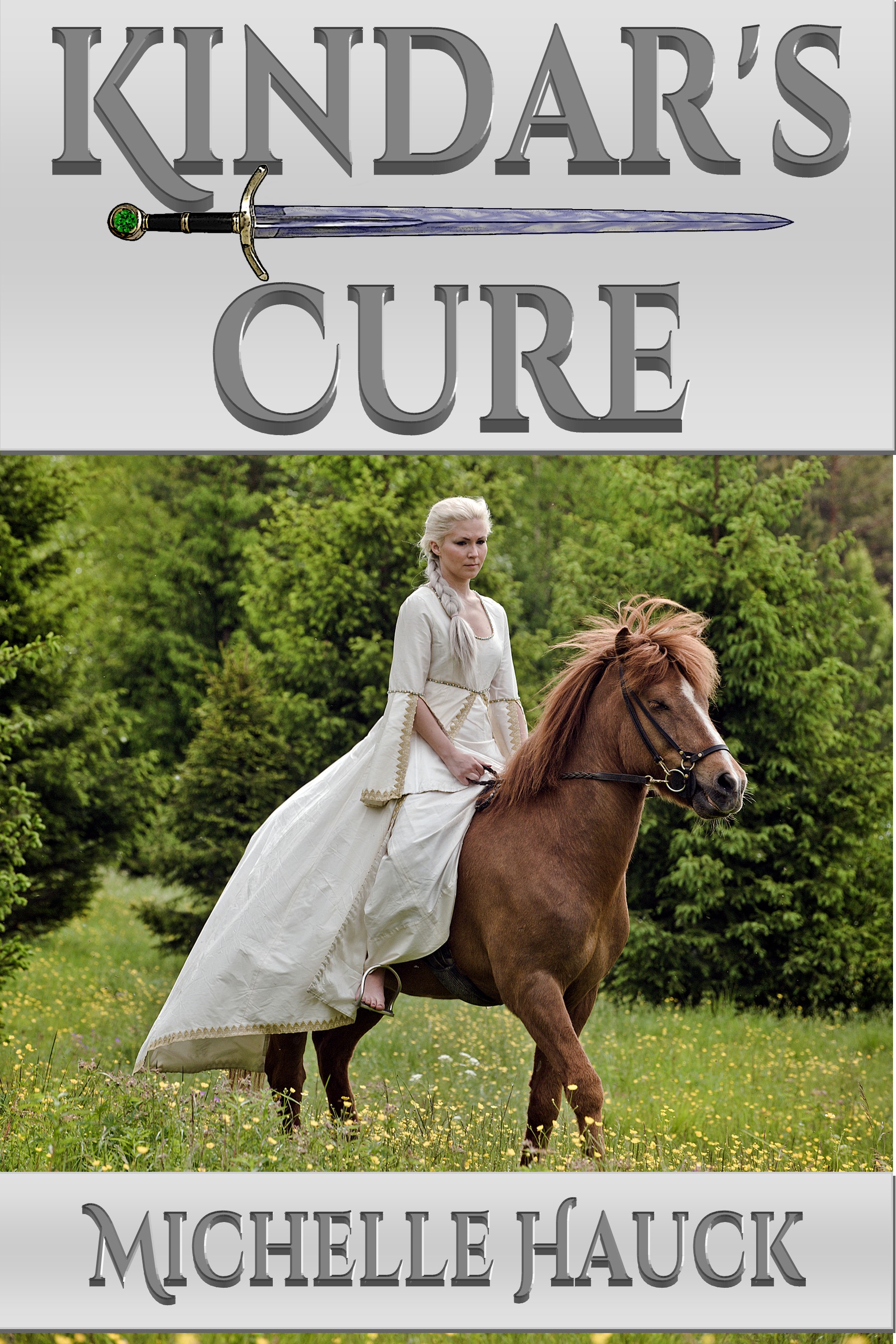
  • Michelle Huack has asked me to host her cover reveal for her upcoming epic fantasy, Kindar’s Cure, which will be hitting the shelves soon!
    I got a special sneak preview of the story earlier this year, and I can’t say this enough: read it. This is a world that’ll swallow you whole, full of characters you’ll fall in love with. And for the love of all that is holy, I want some artists to start reading this book so I can start collecting fanart. Seriously, this is one of those books.

    Kindar'sCureFinal (2)

    Princess Kindar of Anost dreams of playing the hero and succeeding to her mother’s throne. But dreams are for fools. 

    Reality involves two healthy sisters and a wasting disease of suffocating cough that’s killing her by inches. When her elder sister is murdered, the blame falls on Kindar, putting her head on the chopping block.

    No one who survives eighteen years of choke lung lacks determination. A novice wizard, Maladonis Bin, approaches with a vision—a cure in a barren land of volcanic fumes. As choices go, a charming bootlicker that trips over his own feet isn’t the best option, but beggars can’t be choosers. Kindar escapes with Mal and several longtime attendants only to have her eyes opened that her country faces dark times. 

    Her mother’s decision to close the prosperous mines spurs poverty and joblessness, inciting rebellion and opening Anost to foreign invasion. As Mal urges her toward a cure that will prove his visions, suddenly, an ally turns traitor, delivering Kindar to a rebel army, who have their own plans for a sickly princess.

    With the killer poised to strike again, the rebels bearing down, and the country falling apart, she must weigh her personal hunt for a cure against saving her people.


    michelle_h (3)Michelle Hauck lives in the bustling metropolis of northern Indiana with her hubby and two teenagers. Two papillons help balance out the teenage drama. Besides working with special needs children by day, she writes all sorts of fantasy, giving her imagination free range. A book worm, she passes up the darker vices in favor of chocolate and looks for any excuse to reward herself. Bio finished? Time for a sweet snack.

    Her YA epic fantasy, Kindar’s Cure, is to be published by Divertir Publishing in May 2013. Her short story, Frost and Fog, was picked up by The Elephant’s Bookshelf Press for their summer 2013 anthology.
    Find her online over yonder:
    Kindar’s Cure on Goodreads
  • Most of the time I try to keep my blog about semi-professional-sounding stuff. Namely the craft of writing. But that’s burnout for me and I don’t think it gives nearly enough content to you, so I’m going to try something a little bit different.

    On Saturdays I’ll be posting more personal stuff– mostly opinions and reflections, stuff I’ve tried, etc. So please bear with me, and let me know if there’s anything that strikes a spark in you!

    So I’ve got a theory about some trilogies and other multi-book sets– they’re not all like this (not by a long shot), and I may be way off base here, but I’ve noticed it in several over the years.

    All seven books in the Harry Potter series in ...
    A lot of the people I’ve talked to loved the first six Harry Potter Books… and were somewhat disappointed with the finale. Personally, it’s grown on me. (Photo credit: Wikipedia)

    [Disclaimer: I’m not saying anything bad about trilogies in general or the writers who create them. Hell, I’m working on a trilogy right now. But I have seen this pattern enough to be concerned about it.]

    The trilogy starts out amazing. The second one might flag a little bit, but usually it’s also pretty strong. But by the time you get to the last installment, the real cracks are starting to show, and it can end up being disappointing.

    My thought:

    • The first book is amazing because it has to be. Otherwise it wouldn’t get published in the first place. The writer’s had lots of time to work on it. It’s been edited and critiqued and polished so many times that very little, if anything, could escape its net of editors.
    • The second tends to be as strong because it’s so heavily tied to the first– maybe the writer outlined them both roughly around the same time, maybe they started writing and rewriting the second while they waited for the queries for book one to snag a bite. They might not have as much time to simmer as the first, but they still tend to be pretty amazing.
    • Then comes the third (or fourth, or seventh). Whatever the number, it’s the climax. We have this thing about climaxes. We expect them to rock our world, and blow everything before it out of the water. Anything short of that is automatically going to feel like a bit of a letdown. Added to that, there’s now the imposed pressure of deadlines, while keeping up with all the struggles of promotion. Added to that, the writer now has Published Author status– clearly they know what they’re doing, so people may be more inclined to give them the benefit of the doubt when something doesn’t sit quite right. Maybe they’re contractually barred from stuff like the AQC Marathon, which would have caught the snags and plot holes they might otherwise have missed. Long story short, there’s a whole army of factors battling against them, while reader expectations are at an all-time-high.

    Have you found any series that fit this pattern? Do you have any pet peeves that you’ve noticed a lot of over the years? Let me know in the comments!

  • If you want the basics of punctuation, check out these guys here:

    Mr. Clements.com

    Bubblecow.net

    Fanfic.TheForce.net

    A step past the basics

    1) Avoid using synonyms for said/asked, unless that synonym dramatically changes the meaning of the sentence. 

    2) British English uses single quotes (‘You’re a wizard, Harry!’) while American English uses double quotes: (“I can show you the world.”)

    3) Change lines any time you’re drawing attention to a different character. No, seriously, read that post. Leigh Michaels has some incredible tips for paragraph breaks and dialogue.

    Tags and Beats

    A dialogue tag is a a label which tells the reader exactly who said what: he said, she said, I said, the borg collective said as one— etc.

    • The most common format for a dialogue tag is exactly what I wrote above: [Speaker] said/ [Speaker] asked. The name of the speaker first, followed by the manner in which the quotation is being expressed.
    • In times of old, it was common to put said at the beginning of the tag: said Billy, asked the waitress. This order still shows up sometimes, but for the most part it’s considered archaic.
    • The most effective time to use the older style is when the description of the subject gets overly long, and the verb is in danger of getting lost. For example:
      “Want fries with that?” the waitress who brought them their menus asked.
      vs.
      “Want fries with that?” asked the waitress who brought them their menus.

    A dialogue beat is an action that identifies the speaker.

    • The beat shares the same line as the dialogue. This is why it’s so important to switch paragraphs when a person besides the speaker is doing anything. For example:
      “What, is there something on my face?” I wiped my chin.
      He pointed at his own cheek. “Right over there.” 
    • Beats tend to be short. When they get too long, the reader can start losing track of what’s actually said.
    • In the same vein, using too many beats in one conversation can become distracting, and draw attention away from the dialogue.
    • Keep the actions important and relevant.

    And sometimes, your best bet is to use nothing at all.

    • This works best when you’ve got only two characters with distinct dialogue.
    • Use it alongside beats and tags.

    All used together, it looks something like this (tags will be in bold, and beats in italics):

    “Could you please move?”
    “It’s a possibility,” he said. “Who’s asking?”
    “The person whose rib cage you’re crushing. If you could just— thank you.” I rolled over and took a breath. “I have to say, I’m a little bit disappointed.”
    “Disappointed?” His eyes widened. “I’ve been doing this a long time, mouse. Nobody’s ever tried to give me a critique.”
    “I’m not complaining,” I said quickly. “Not really. I appreciate your being here. I do. But the stories always make death seem so… romantic. This is… not.”
    “You can’t be serious.”
    “It’s just that you only die once,” I said. “I suppose I expected it to be a big to-do.”
    “Then it’s a good thing you’re not dead.”