JWTroemner.com

Home of JW Troemner and Urban Dragon

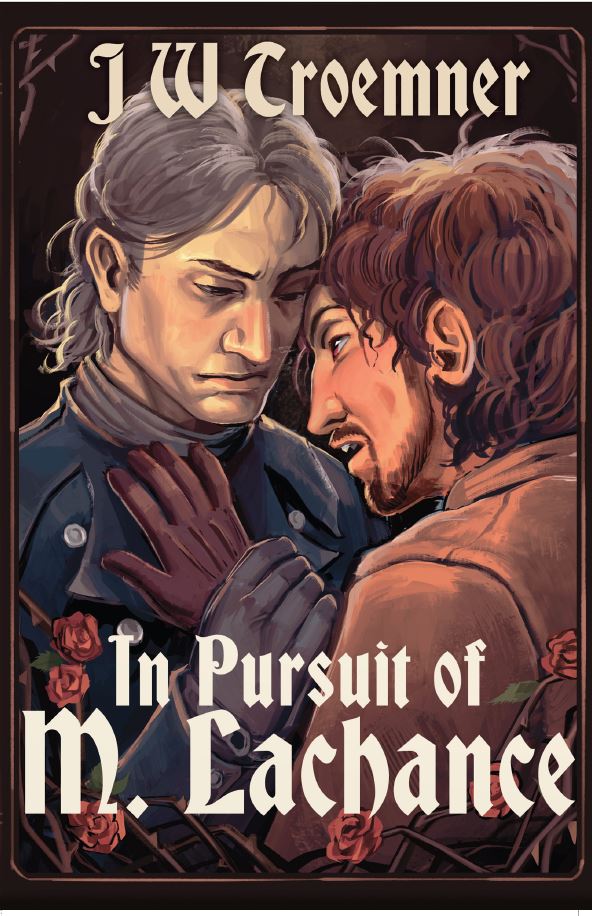
  • It’s been two years coming, but it’s time to unveil the newest book: In Pursuit of M. Lachance!

    This cover was painted by the magnificent Anne Hessel, whose work you can find at https://www.instagram.com/anniehesselart.

    Interested?

    The case should be open and shut: a madman claiming to be a vampire hunter attacked a wealthy gentleman. Unfortunately, Inspector Etienne Durand knows the victim is no gentleman: he’s the burglar Marcel Lachance, Durand’s childhood crush, who broke his parole to live under a false name. Determined to send him back to prison, Durand goes undercover as Lachance’s lovestruck suitor, hoping to get close enough to find evidence against him. But the more he entangles himself with Lachance, the more he realizes that the accusation of vampirism might not be so far off the mark.

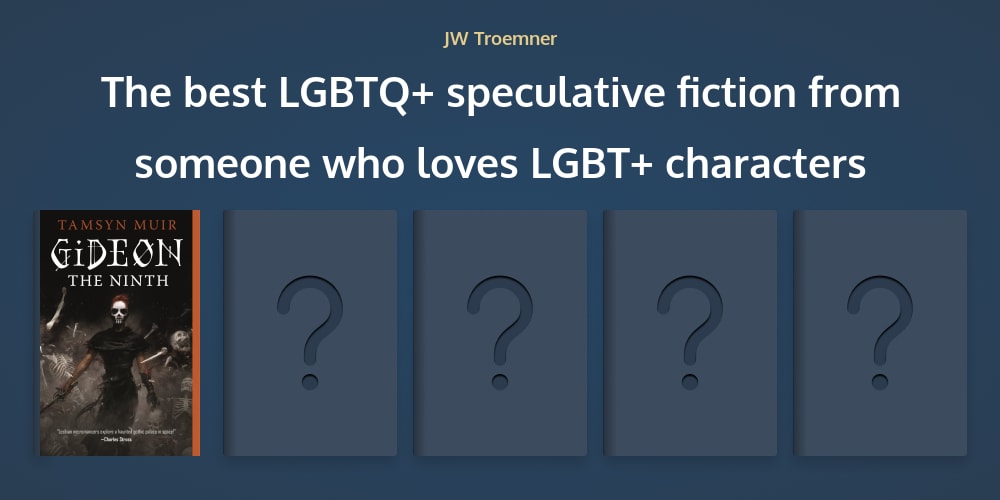
  • I’ve been featured on Shepherd with my list of some of my favorite LGBTQ+ books, if you’d like to give them a gander.

  • So much gets lost in a story between the initial drafts and the finished piece, and one that really vexes me is the subplot surrounding Doctor Quinque “Quinn” Magbantay of ThreeClaw’s Hoarde. I struggled hard to find a way of exploring that story on the page, but the harder I tried the more I realized that most of it wound up being backstory and memory, which was sharply at odds with the pacing and tone of the rest of the series. In the end I realized if I was going to spend that much time on the past, I could either do Nadia’s backstory or Quinn’s, not both, and I chose Nadia.

    Technically speaking his subplot still happens (for the most part), but it’s built into the mechanics of the world, rather than spelled out directly. Sometimes, though, you’ll see it referenced in moments like these:

    I didn’t even look up. “According to their family’s taxonomy, poludnica are a subcategory of fae, which they refuse to deal with as a consequence of an incident with French faerie in in the seventeen sixties. The details should be in the reading.”

    “Yeah, but according to Quinn’s Index, poludnica aren’t fae.” She sounded entirely too proud of herself for that piece of trivia, like she expected a reward for doing the bare minimum expected of her.

    “Just because his research is considered the standard here doesn’t mean it’s universally accepted,” I said.

    “Then have Quinn talk to them,” she said. “He’s the head doctor. That’s like double authority figure status. And he can convince them to use his Index so they don’t keep calling you things you’re not. Everybody wins.”

    (Book 6: Aglaeca)

    So here’s a little look into the story that wasn’t told:

    The First Follower

    Thanks to the Order’s influence, there’s a constant need for secrecy among non-humans. When your continued survival depends on passing for human, you’re not going to do anything that might out you– and that includes things like going to the doctor. Consequently, medical and biological knowledge of non-humans falls far behind any kind of modern standard, with most of it being an amalgamation of guesswork and folklore, and those few non-humans who dare to do research in secret, mostly among friends and family that they could trust.

    Enter young ThreeClaw. This was in the mid-sixties, and she had recently been rendered permanently left-handed after a fight with another dragon. She was aware that she was significantly smaller and weaker than similar dragons, and self-conscious of that fact, but unwilling to bring that up to anyone. Rather than ask directly, she trawled through medical schools until she found a recently graduated non-human among the upcoming graduates who fit her needs. She settled on an Aswang named Quinque Magbantay, and hired him to answer that question for her in the most roundabout way she could manage– she couldn’t ask him what was going on with her, because that would imply that something was wrong with her, which it was not. So she instead had him conduct a medical survey on as many living dragons as he could manage without getting eaten, taking their measurements and vital statistics, and generally figuring out the basics of their biology.

    But of course, she couldn’t have him focus exclusively on dragons, because that might lead him to think that there was something she was insecure about. So she instead had him conduct this survey on all surviving species of non-humans. To supply the foundation for this survey, ThreeClaw broke into several Order strongholds and stole what research they had, most of it compiled from vivisection and post-mortem study. The information was largely limited by its focus on methods of killing non-humans and ways of utilizing their parts, with almost no research done into things like how to keep a non-human of any given species alive or healthy.

    During those heists, ThreeClaw liberated several of the Order’s victims who had been kept alive specifically for the purposes of that research. She turned the survivors over to Quinn’s care for treatment, and he began to annotate the stolen reports with data he gathered while providing care. Some of those survivors left once they were well enough to set out on their own, but a good deal of them were reluctant to leave the protective influence of a dragon or the unprecedented access to medical care (particularly when so many of them were left disabled by the machinations of the Order). ThreeClaw had already started using the spoils of war and the magical doorways, her own invention, to commission the construction of what would become the FellDeep. It was intended mostly as a place to stash her stuff, but Quinn persuaded her to adjust the plans to include living quarters for the refugees, creating the beginnings of the Hoarde.

    The Hoarde

    ThreeClaw’s raids on the Order continued, partly in search of more information, partly to steal their resources to provide for her ever-growing follower base, and partly because they just plain pissed her off. It wasn’t long before refugees who were able to fight offered to join her on the raids, though with mixed results. Even as a small dragon, ThreeClaw had size and natural armor on her side that most of them didn’t, and the casualties were high. Meanwhile Quinn started turning his research skills toward more efficient ways of healing, and through a lot of trial and error and collaboration with other non-human sorcerers and chemists, he was able to create Styx, a regenerative substance that could bring people back from anything short of total cellular death. He immediately wanted to share the formula, but ThreeClaw put a stop to that– it was too powerful and too dangerous to be in anyone’s control other than her own, and too new to be administered by anyone other than Quinn. Thanks to the invention of Styx, ThreeClaw and her ragtag Hoarde very suddenly became a force to be reckoned with, both by the Order and by those enclaves of non-humans who’d accumulated enough power to protect themselves. Most of those enclaves were fairly small and insular, many of them either family clans or those small groups of people under the protection of other dragons, though none of them had the same sheer size and diversity of the Hoarde.

    Quinn encouraged that growth, citing the ever-growing population as a source for more data. Other non-human doctors and researchers were eager to share their own research that had been conducted in secret, and patients were eager to submit to study, many of them hoping for answers to questions they’d long been pondering in silence. The end result was Quinn’s Index of the Inhuman— a sort of Gray’s Anatomy/WebMD-style encyclopedia spanning more than a dozen volumes, detailing how members of the various species functioned and why. Quinn naturally headed this research, as well as the Hoarde’s medical department, such as it was, and took over a good deal of de facto leadership of the Hoarde in general.

    Meanwhile ThreeClaw was steadily losing interest in the organization. She already had the answers that she’d originally sought from Quinn– stunted growth as the result of severe childhood malnutrition– so there was no real reason to keep up the framework that made the Index possible. From the beginning she’d felt discomfort in the center of a group, often leaving the Felldeep without a word when she didn’t want to deal with it all, and coming back only out of a sense of duty. The idea of being perceived to be overwhelmed or negligent was unthinkable, and so she cultivated an air of aloof mystery, saying very little to anyone about anything. Even her identity as a dragon was the subject of some debate– in order to avoid letting people know how small she really was, she avoided letting herself be seen in full scale unless absolutely necessary. The gaps in her leadership and erratic behavior were shored up by the lieutenants around her, particularly Quinn, Nadia, and Ivan, who divided up the management of the Hoarde and the Felldeep amongst themselves based on her vague instructions.

    As ThreeClaw’s personal doctor and oldest follower, Quinn was aware that something was up, but he was at a loss for how to do anything about it. She was a dragon, she was his boss, and she wasn’t exactly the kind of person who would take kindly to being told that she might be suffering from mental illness, and so he kept quiet and told himself that her melancholy was just a quirk of her personality, rather than anything that needed to be addressed. He observed some improvement when she accepted Nadia’s bid for a relationship in the late nineties, but even that was marked by distance and secrecy, and ever longer disappearances. When ThreeClaw finally vanished in 2007 and didn’t return, he privately feared that she’d succumbed to her depression.

    The Unwritten Chapters

    Here’s where we get into the events of the book, and elements that made it in weave together with plot threads that got cut.

    When Arkay arrived on the scene seven years later, Quinn determined to make up for his earlier failings, and he tried to act as a sort of mentor to her. Especially early in her tenure as the Hoarde’s new(ish) leader, she spent a good deal of time in his office, complaining to him about her frustrations about Nadia and her duties, and he did what he could to facilitate communication between them.

    Before Nadia warmed up to Arkay, Quinn was her primary advisor and mentor, and answered what questions he could about her past, but ThreeClaw’s penchant for secrecy meant that there was little he could actually tell her. It was enough, though, for Arkay to put together just how bad ThreeClaw’s mental health had been– something she’d been picking up on pretty much from the moment she first stepped into the Felldeep.

    This place was built like the inside of an Egyptian pyramid: a hidden entrance, a long tunnel, a grand gallery with its assortment of booby traps. Following that pattern, I could expect the very top to have the pharaoh’s chamber.

    No self-respecting dragon would settle for any less.

    (Book 5: Forest of the Damned)

    She confronted Quinn about his failure as a doctor and friend to do anything about it (and about the Hoarde’s lack of decent mental healthcare in the first place)– and he finally voiced his frustrations at ThreeClaw’s reticence and pride, and how ThreeClaw’s refusal to ever show vulnerability made it impossible to help her even when he tried.

    This confrontation happened right before a separate confrontation involving an oracle and some deeply unpleasant revelations about Arkay’s fated future, which left her badly shaken. This time around, though, Quinn was able to reach out and be there for her, and Arkay was able to accept his support and actually face what was coming.

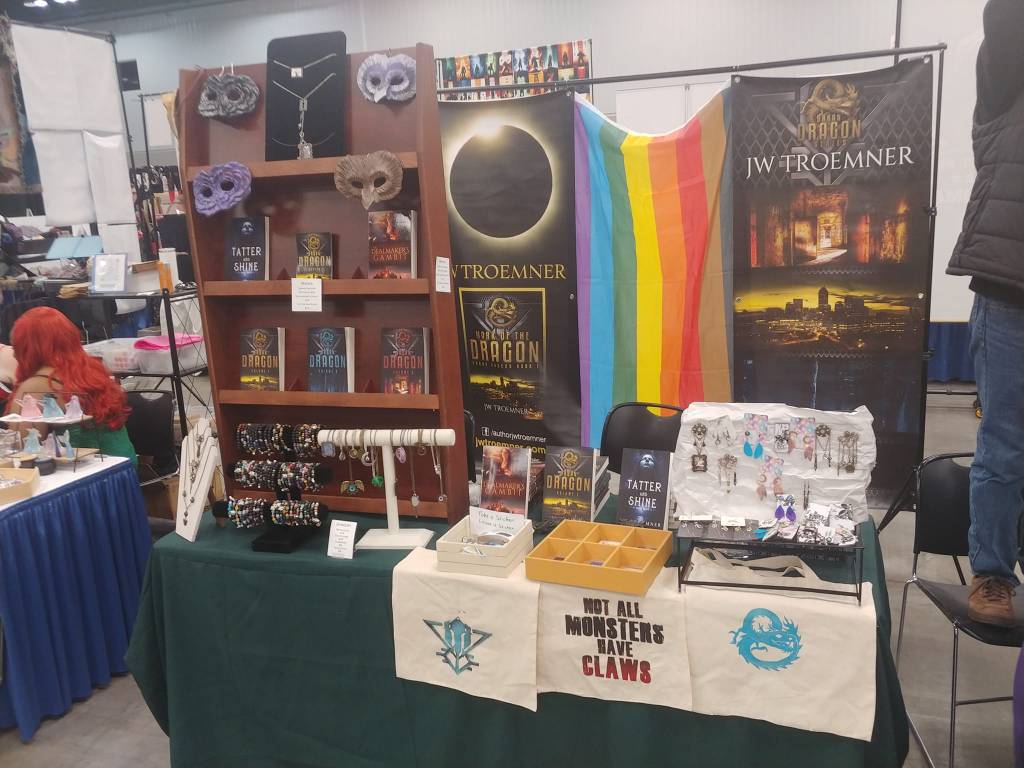
  • It’s that time again– this weekend I’ll be at Indy PopCon at the Indianapolis Convention Center.

    You’ll find me in Booth D1, accessible right through the main gates.

    I hope to see you there!

  • Hello all!

    Today is the day of a total eclipse over, among other places, Indianapolis.

    (Image from Nasa)

    Historically, a number of cultures tied a mythology to eclispes that they were the result of a dragon (or dragonlike creature) swallowing the sun.

    According to ancientegyptonline.co.uk:

    Apep would swallow the sun god, but they would cut a hole in the belly of the snake to allow the sun god to escape. If they failed, the world would be plunged into darkness. … Like Set, Apep was also associated with various frightening natural events such as unexplained darkness caused by solar eclipse, storms and earthquakes.

    https://ancientegyptonline.co.uk/apep/

    According to exploratorium.edu:

    A recurring and pervasive embodiment of the eclipse was a dragon, or a demon, who devours the sun. The ancient Chinese would produce great noise and commotion during an eclipse, banging on pots and drums to frighten away the dragon. The Incas, too, tried to intimidate the creatures who were eating the sun. In India they took a different tack — people would immerse themselves up to the neck in water, an act of worship they believed helped the sun fight off the dragon.

    https://annex.exploratorium.edu/eclipse/dragon.html

    That was the image in my mind when I was writing the Urban Dragon series, when I made the Order’s long name the Order of St. Michael of the Sun, and why I named my imprint Swallowed Sun Books. The image was just too perfect to pass up.

  • A funny thing happened this weekend at Indiana Comic Con. Two of the people who came to my booth– both of them younger, neither of them readers of mine before this– mentioned having seen and heard of my books before. Not at previous conventions, or at libraries, or bookstores, or in someone else’s hands, but online. Either on Facebook (an ad? or a reel?) or on TikTok, it wasn’t super clear in either of their minds.

    Which is kinda odd. Because I don’t have a TikTok (a written blog is more than enough for me, please) and it’s been a very long time since I’ve bought ads on Facebook, and I’ve never paid to promote my page.

    So where did these people see my books?

    A few theories present themselves:

    1. Someone read one of my books and posted about it. Which would (hopefully) be awesome, and if that’s the case I’d love to get a link so I could share the video.
    2. Facebook decided to recommend my Facebook page to people unpaid. This would be appreciated, but kinda weird– famously, page owners have to pay big bucks to have Facebook show their post to a greater percentage of their own followers. Spreading the word of my books gratis seems uncharacteristically generous.
    3. It wasn’t my book they saw, but an unrelated one with a similar cover. This seems the most likely to me. Most covers available to authors in my income bracket are made by digital artists creating a composite image out of a number of licensed stock images. That isn’t an exclusive license, and so the same image and can wind up being used by multiple artists for multiple projects– especially if it’s a particularly distinctive one that leaves an impression.

    It doesn’t stretch the imagination that the image of a young woman surrounded by burning pages might work thematically for other books. Which is why I’m guessing that some other author might have promoted their own book, and unwittingly gave me a leg up as well.

    Whatever the cause, it’s a neat little mystery, and one I’d love to see solved.

  • Ordering books just before a convention can be tricky. You never know when there’s going to be inclement weather, production mishaps, or just plain bad luck at play, so the process of waiting for the shipment to arrive is always just a little bit nerve wracking.

    And with Indiana Comic Con happening this weekend, I was biting my nails.

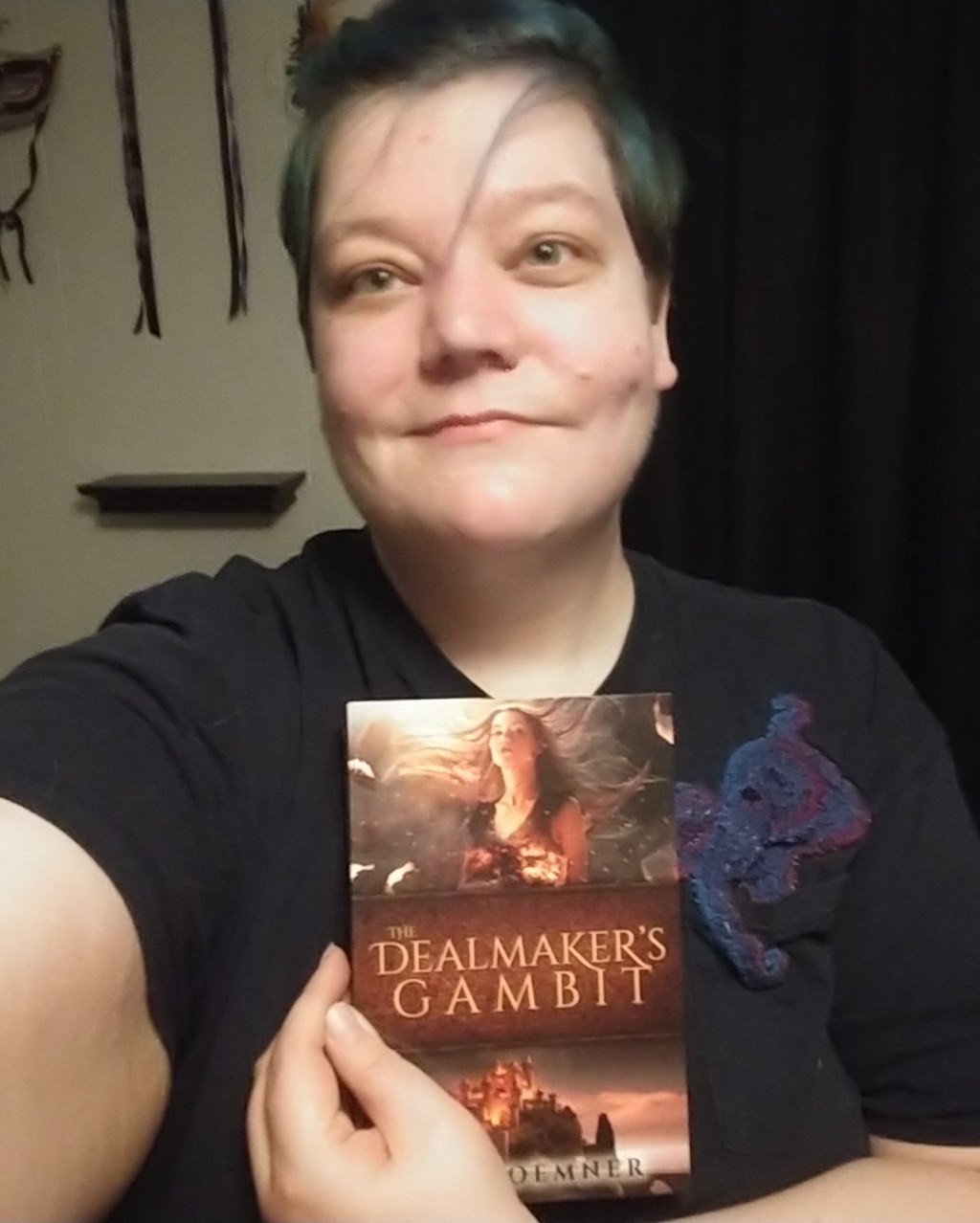
    So you can imagine my relief when I found these on my porch!

    That’s one less thing to stress about before I get all loaded up for the con!

  • The way the Urban Dragon series was formatted required a lot of hard choices about what moments I showed and what would be lost in between. This is one of those little moments that I never got the chance to sneak in there, between Arkay and Meph sometime during the two-year timeskip before Crusader Non Grata


    Click went the handcuffs. They wouldn’t hold Meph for long, not with all the convenient lockpick-like tools one could find near a dumpster, not with the high visibility of a bloodied man restrained in a back alley like something out of a comic book, but long enough for my needs.

    “So.” I hoisted myself onto the dumpster and met his glare with a pleasant smile. “Quick question for you.”

    “You can go straight to hell.”

    “Which I’m choosing to interpret as, ‘go right ahead, Arkay, I’m all ears’. So I wanted to know, what do you wear to a Catholic award ceremony?”

    His glare froze on his face, kept in place out of force of habit. “What?”

    “I mean, I’ve attended Mass and all, but it’s not like I was awake during most of it. And you were practically a choir boy, so I figured you’d know.”

    What?” 

    I swung my legs impatiently, kicking up a rhythm against the side of the dumpster. “Father Gabriel’s being honored by the Archdiocese or whatever, and I wanted to know the dress code.”

    “Father Gabriel,” he said slowly. 

    “Nice guy, talks in sign, still walks with a limp since you dropped a building on him?

    Meph averted his eyes. “You’re never going to let that go.”

    “Depends. Are you ever going to quit trying to murder me?”

    He didn’t answer. But our conversation hadn’t yet been interrupted by any well-meaning do-gooders, so I had time. Mostly I just sat and swung my legs while Meph fiddled around for potential lockpicks. 

    When he finally did talk, it was so quiet I barely caught it. “A dress.”

    “Hm?”

    “You wear a dress. Not the kind you’d wear to a club,” he clarified with a glare. “Skirt past the knees. Sleeves. No bare midriff or tit window.” 

    I pulled a sharpie out of my boot and made a note on the inside of my arm. “Gotcha. Anything else?”

    “I’m going to kill you, you know. One of these days.” 

    “Someone’s gotta do it, right?” I hopped down from the dumpster and grabbed a twenty dollar bill out of my bra and tucked it into the pocket of his jacket. “Just make sure it’s after next Thursday. I think a murder would kill the mood at Father Gabriel’s big day.” 

    He grunted and said nothing else as I walked away. 

    I wondered if I’d see him there. It was a long way to travel for a one-day event, who knew? Maybe he’d want to offer his support.

    Stranger things had happened, after all.

  • There was a subplot in the Dealmaker’s Gambit that had to be cut because I just couldn’t get it to gel the way I wanted it to.

    The TL;DR was that Irora had Zag make a number of talismans into peppercorns and plant them in high-end restaurants, resulting in a number of wealthy civilians (and one seagull) getting arrested as dealmakers. It was a bit of chaos and comedy, and a glimpse into the way that laws are unequally enforced among classes.

    Below are the outtakes of what I had written of the saga.

    (more…)
  • I don’t often write while listening to music, but I do use music to get me in the right headspace to start writing.

    A few highlights:

    Child of Ashes by Madds Buckley

    The vocal quality of this piece is what I have in mind when I think of Zag’s voice, and the lyrics put me in the space of those early encounters before Zag and Irora got comfortable with each other.

    Child of ashes and child without home
    Where will you run, in the night?
    Child of broken flesh and bones
    Where will you go to hide?

    Heroes won’t help poor folks like you
    Blood on their hands, dust in their shoes
    Heroes will hunt you and lead you astray
    Don’t cry now my child, here you can stay

    Safe in the arms of those who know that you deserve a place
    Safe in the hands of those below
    We can watch the world decay

    The Devil Within by Digital Daggers

    This is very much Irora and her revenge, particularly her in opposition to the Commander.

    I made myself at home in the cobwebs and the lies
    I’m learning all your tricks, I can hurt you from inside
    I made myself a promise you would never see me cry
    ‘Til I make you

    Take Him Away by the Dirt Poor Robins

    Every time I hear this song I’m thinking of the trial and interrogation scene when Rinvu is first introduced– particularly the awareness of the person standing behind the judge’s podium of just how far removed this situation is from actual justice.

    Take him away
    I’ve washed my hands and I cannot be blamed
    No I will not be liable for his final fate
    He will not find justice here today

    Irony by the Dirt Poor Robins

    There’s a surprising amount of Dirt Poor Robins in my playlist, actually. This one speaks to me of the Commander and the way she’s tied her morality into knots trying to justify herself.

    This pride has left you blinded or willfully confused
    You thought that when you cried for justice, the target wasn’t you
    Yet in the end your fatal flaw, the measurements were wrong
    For you saw the sins of others, as greater than your own

    Going Down Fighting by Andrewa Wasse and Phlotilla

    Going Down Fighting always puts me in the mind of Irora surrendering to Rinvu. Even before she arrives at the gendarmerie, even with all the plans she and her friends have made, in the back of her mind she knows is going to blow up in her face– and she goes anyway. This more than anything else is her defining choice in the book, and it’s the one that hits her hardest with consequences.

    If the city’s on fire
    I’ll stand in the ashes
    There’s no turning back
    It’s ready or not
    So I’ll fall to my knees
    And pray for the masses
    ‘Cause this world
    Is all that we got

    (Also: there was a version of this story where the Commander lit the city on fire in order to sway public opinion to her side. That subplot got scrapped, but the vibe of it was still with me when I stumbled on this song.)

    Ashes by the Longest Johns

    This is very much a Kiha song. They are the beating heart (and let’s face it, the mental stability) of this story, and this song really carries the memory they carry with them, and the aged grief that comes with it.

    Do you feel heavy? Your eyes drop with grief
    Your spirit is wild and your suffering is brief
    So never you buckle and bend to the masses
    I’ll tend to the flame; you can worship the ashes

    And a special mention:

    What Love Can Heartbreak Allow by Ben Caplan

    When I think of traditional Mataan music, it sounds like this: a round/perpetual canon in which multiple verses are layered on top of one another.