JWTroemner.com

Home of JW Troemner and Urban Dragon

  • Where does a story take place?

    Sometimes, giving a story’s location is unavoidable. If a story takes place in outer space, on Mars, or in Wonderland, the laws of physics might affect the characters completely differently than they would on Earth.

    But sometimes it’s not so simple. I’ve had conversations with multiple authors about the settings of their stories, only to find myself frustrated with some of the answers.

    “It’s in a town,” some say. “A small town.”

    When pressed for more information, they might elaborate: “oh, it could be anywhere, really.” Often they’re making a case for their story having universal appeal.

    While some things– hope, grief, tragedy, teenage impulsiveness– really are universal, the intimate customs of a given place usually aren’t, and plunging on without giving the readers at least some inkling of what to expect can leave the reader playing catch-up as they try to figure out the context of the story they’re reading.

    If a story takes place in 1990s small-town Georgia, walking in on two men making out might make the viewpoint character uncomfortable. In New York City in 2016, it might not even register to the viewpoint character unless they know one of the men personally. In 1980s  Iran, it might be a matter of life and death.

    Even for smaller, less plot-important details. Two strangers pass on the road going through a snow-covered forest. One glances at the other and smiles at them. If they’re in rural Canada, that’s just an afternoon stroll. If they’re in rural Russia, the smiling stranger might be committing a faux pas.


    If the reader assumes that the story takes place in his or her own home state, they’re going to be making assumptions based on the laws and cultural mores as they understand them. One of the easiest ways to avoid confusion is to simply tell the reader where this is.

    Is it a rural southern American town? The streets of Cairo? The beaches of Malaysia? A friendly desert town in Southwestern America?

    Have you ever gotten mixed signals about where a story takes place? Let us know in the comments!


  • No.

    It’s such a simple word, but those two letters carry a lot of power.

    • No, I won’t give you my phone number.
    • No, I won’t follow in your footsteps.
    • No, I won’t let you murder people.

    It’s almost inherently rooted in conflict and contradiction, a refusal to go along with the flow, whatever that flow may be. It’s a line in the sand, and that line can be as shallow as ‘do you want a taco?’, or it can be integral to preserving your autonomy and sanity.

    That same word can completely change its meaning depending on where it’s coming from. From a person with little power in a given relationship, it becomes self-possession and a hold on autonomy. (No, I won’t let you treat me this way.) From an entity with power, it can become a force of oppression (No, you can’t get an education.)

    But let’s take a step past that analysis. How do your characters handle hearing that word? How do the people you know? How do you?

    • Do they accept it?
    • Do they try going around the obstacle? (How many kids hear ‘no’ from one adult and immediately ask another one?)
    • Do they respond with an outburst of violence?
    • Do they make their rejection of that ‘no’ the premise of a presidential campaign?
    barack-obama-yes-we-can-blue-campaign-poster
    This reference is so dated it comes with a year on the poster.  Source

    Most people’s reaction to a ‘no’ will depend on the situation it’s presented in, but which situations matter can speak volumes about what they value. What is it that makes the difference?

    • If they perceive that they’re being denied injustly?
    • If they think they’re owed something they can’t have?
    • If they’re being denied by  a person who is an authority over them? Or somebody who they perceive to have authority over?
    • If there’s a particular set of rules they won’t break, like halaal, halakha, or the sanctity of a person’s bodily autonomy?

    In Urban Dragon, Arkay is an authority unto herself, and any insistence that she can’t or shouldn’t do something is met as a challenge. Nothing is worth compromising her pride, not even at the risk of injury or death– unless she’s doing it for her best friend Rosario.

    How do your characters deal with being denied? How do the people in your life? And what do you think that says about the things that matter most to them? Share it in the comments!

  • I’d like to propose a new test.

    We’ve got a slew of them already.

    • The Bechedel Test (in which there are two named female characters who talk about literally anything that isn’t a man)
    • The Mako Mori test (in which there is a female character who has her own plot which isn’t about propping up a man)
    • The Sexy Lamp test (in which a female character couldn’t just as easily be replaced by a sexy lamp)
    • The Fleshlight-with-a-Post-It Test (in which a female character can’t easily be replaced by a fleshlight that happens to have a single piece of plot-critical information written on it with a post-it note)

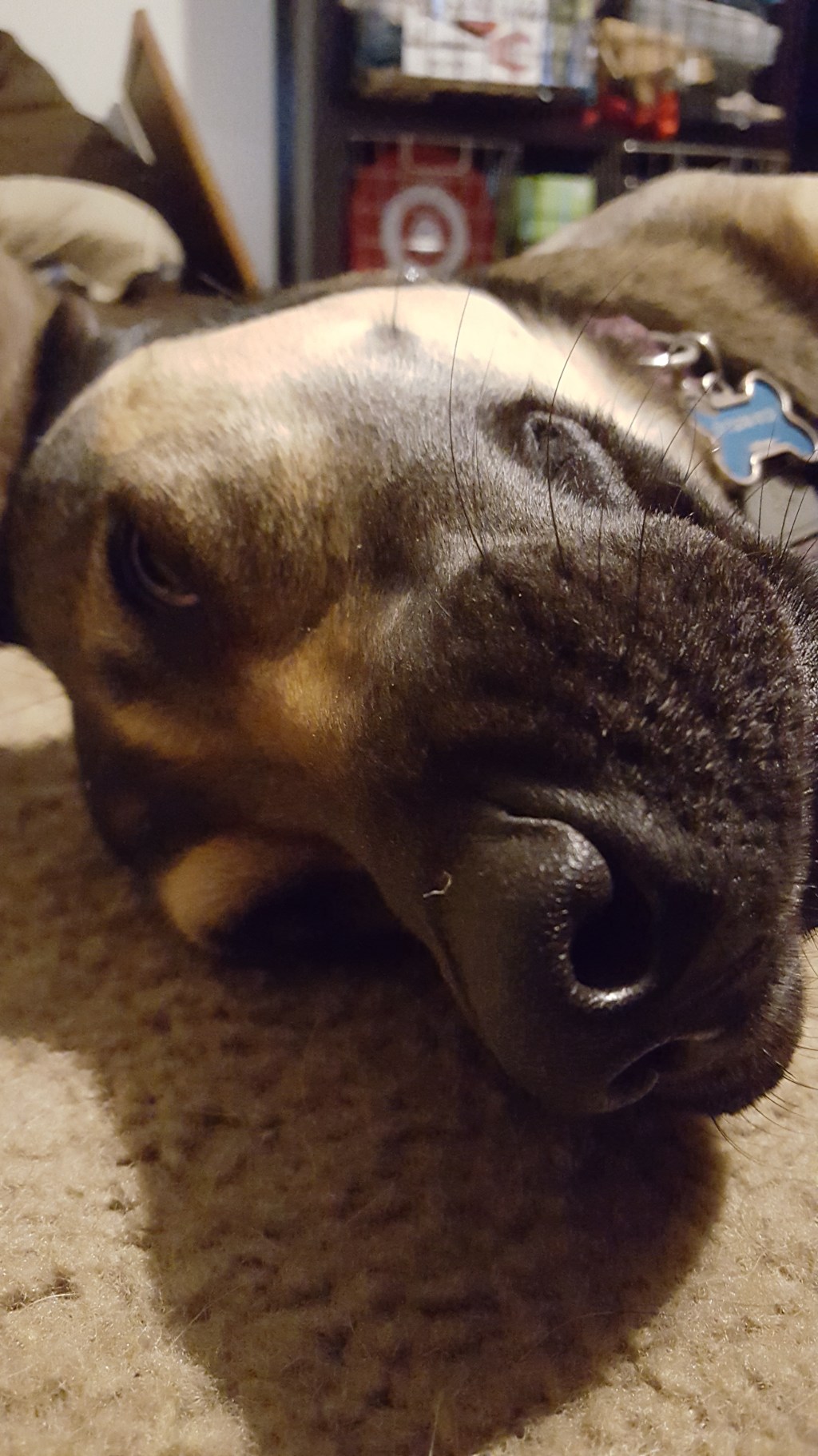
    I’d like to add The Labrador Test: In which a female character can’t easily be replaced by an adorable dog that a male character is just so gosh-darn attached to.

    20160124_052605
    Guess who’s ready for her close-up?

    And dear God, I’m so sorry we still need for this test to exist. I’m sorry that female characters are still being sidelined to the point where the entirety of their dialogue could easily be replaced with a soulful gaze and a wag of the tail while the male characters are given all the lines that actually move the plot forward. I’m sorry that their contributions to plot lines add up to the hero not wanting her to die, and (on a good day) occasionally barking at something interesting and/or dangerous so the hero can do something about it.

    You see it even in the recent Deadpool movie, where we’re given four female characters who spend an awkward amount of their screentime following silently at the heels of a male character who actually advance the story. And I’m glad that they’re given screentime and lines at all, I’m glad that we get a whole whopping four as opposed to a single token lady (or none at all) as still happens so very often. I’m glad that at least two of them aren’t sexualized (especially considering one is a minor and the other is elderly).

    But would it kill the writers to make them actually relevant to the plot?

    I get it. Wade loves Vanessa. And she’s important because he loves her. She makes him happy. And she affects the plot because he doesn’t want her to get hurt. And… really, that’s it for her, isn’t it?

    This is not me picking on Deadpool. It was a fun flick, and I enjoyed it a lot. But it’s also a one of the latest in a trend that we’ve seen all too often, and it’s one we’re going to keep seeing.

    Vanessa’s role is the exact same role played by the dog in I Am Legend. And by the dog in Shiloh. And, really, any other movie that has a non-talking dog in it. In dog movies, it’s not uncommon for the protagonist to lay down some exposition or work through personal problems by venting to their animal companion.

    I’m not saying that these characters are necessarily unlikable. After all, I enjoyed the dog in I Am Legend, and the dog companions are always adorable (if sometimes trying) in games like Fallout and Skyrim. BB-8 and R2-D2 in the Star Wars franchise are also wonderful and lovable, but notice that while BB-8 was being lovable and in danger, we still had Rey and Maz and Leia actually being active and moving the plot along. And let’s face it, BB-8 and R2-D2 both still have a whole lot more bearing on the plot of their respective movies than a lot of female leads do in theirs.

    20160124_052524

    Please, guys. It’s 2016. Let’s try to do better.

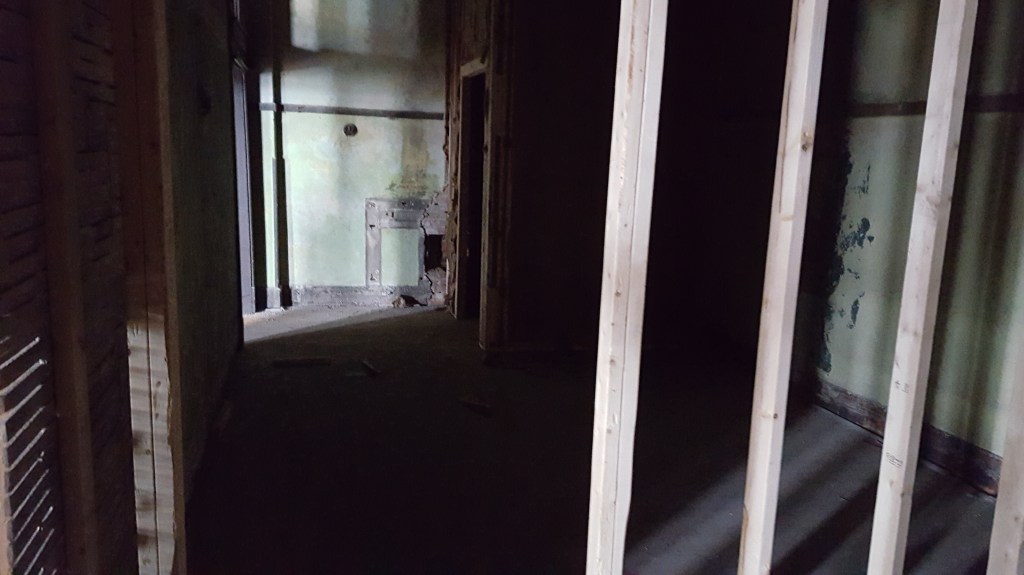
  • I was running errands when I passed a pair of workers heading in and out of an abandoned building in my area.

    I won’t pretend I wasn’t giddy. Men at work means I can usually ask nicely and get permission to wander around inside, so I officially won’t be trespassing (it also means that the floor probably won’t collapse underneath me. Because, you know, abandoned building.)

    I was also more than a little giddy to see this long-since-derelict building finally getting the attention it sorely needs. Because new construction often brings with it much needed jobs, traffic, and business into an area that has been neglected for far too long.

    But for the moment, I was mostly excited about the chance to explore.

    Here’s what I found inside.

    This slideshow requires JavaScript.

  • (Note: there are some vague spoilers for Daredevil and other titles in the MCU. I don’t get into too many specifics, but you have been warned.)

    I was watching the most recent season of Daredevil, and something struck me as off. It was surprising– I really enjoyed the first season, and I thought it was well done. But by the second season finale, I was getting agitated. There were a couple of issues, but the biggest one was that it struck a personal pet peeve of mine: he still has a secret identity.


    I’m picking on the super hero genre, but the unnecessary secret is a huge trope all over the place. Vampires are forbidden from breaking the masquerade, and wizards can’t expose magic to muggles. There’s inevitably a long, drawn out sequence where the mundane person is suddenly exposed to this secret world that they never knew existed, and is forced to re-evaluate their relationship with the ones they love.

    But… why?

    It wouldn’t bother me nearly so much if there was an actual solid reason for something to be kept secret, but that’s rarely the case. Often, it feels like a plot device to either create artificial drama, or as a plot coupon to explain why a hero/villain can go around killing masses of people without consequences, or to explain why only the designated hero could possibly stop the designated villain rather than the police or the army. (It has often been pointed out how quickly a gun could have taken out Voldemort, even if not all his horcruxes.)

    The MCU has actually been pretty good about this for the most part, and it shows in the kind of plots that the characters are suddenly intertwined with. Being unmasked means that heroes suddenly have to face the consequences of their actions. Iron Man and Captain America have both been harangued by the US government about who owns their superpowered identities. Jessica Jones and Frank Castle have both been taken to court for, you know, killing people. These are new and interesting plots that you don’t see very often in the super hero movie/show genre (I won’t get into the comics, since there is literally a comic about the people who clean up after superheroes. Just because a thing isn’t mainstream doesn’t mean it doesn’t exist).

    So this isn’t me calling out all secret worlds ever. Just the ones that don’t make sense. Particularly when they intersect with relationships.

    Love in a time of secrets

    You already know the old song and dance. “I can’t tell Aunt May that I’m Spiderman! Her heart can’t take it, and she will surely die!” “I can’t tell Lowis Lane that I’m Superman, because then she’ll be targeted by my enemies!”

    Cue lots of lying and cover-ups, awkward misunderstandings and hurt feelings. Cue the loved ones of the super hero inevitably being kidnapped by all manner of villains anyway, and generally being put into more danger by their ignorance, often while trying to find out more about the hero or the secret identity. Cue them feeling lost and useless while the hero misses out on much-needed help that this person easily could have provided.

    Perhaps most irritating to me, it almost always feels like rampant misogyny. Because even though platonic best friends sometimes get caught with the short side of the secret identity stick, that role usually falls on their wife or girlfriend (or in Peter Parker’s case, his aunt). Even if another man is kept out of the loop, they’re often clued in earlier and with a whole lot less drama than their female counterparts. (Because of this, I’ll be using ‘he’ for the hero and ‘she’ for the loved one from this point forward, even though either person can be any gender).

    Hero knows best

    Sometimes the hero’s loved one is told to just leave town, usually without explanation. She’s expected to obey without question, despite the hero’s erratic behavior. It doesn’t matter that she’s been shown to be reasonably intelligent before now; she doesn’t actually understand the situation, so she should just do as he says and trust that he knows better than she does.

    It’s not just in isolated incidents of danger, though.

    “She can’t know, or she’ll be in danger” assumes that it’s his right to decide whether or not she pursues danger or avoids it. If she doesn’t want to be involved in his life, it’s within her rights to leave. If she wants to risk the danger of associating with the hero, then it’s within her rights to stick around.

    Consequently, the hero spends an irritating amount of the plot chasing after his loved one and saving her from obvious danger, as if she was a toddler playing blind man’s bluff in a knife factory. And there’s a reason for that: Taking away their right to know takes away their ability to make an informed decision. The entire premise of the secret identity reduces her agency to that of a child.

    Good secrets

    That isn’t to say that there can’t be secrets for good reasons. There are plenty of LGBT+ individuals who have to keep secret identities every day, because telling the other person could have grave consequences, especially in one of the many countries where those identities are criminalized. “If she finds out, she’ll be in danger” is very different from “If she finds out, she’ll try to kill me” or “she might not want to kill me, but she may tell someone who will.”

    The biggest difference in this case is that the hero (the person keeping the secret) is trying to protect themselves, not the person they’re lying to. And consequently, they’re not infantilizing the other person by making decisions on their behalf. And that makes all the difference.
  • A well-respected bit of writing advice says you should limit the characters you introduce to your reader. Some have argued that you shouldn’t introduce more than five in the first chapter; others say you shouldn’t introduce more than two or three at any given time.

    It’s good advice. Having worked in the food industry, I’m all too familiar with the consequences of being loaded with dozens of names and faces in a short period of time. Pretty soon even the distinctive, memorable ones start disappearing into the vague masses.

    Pretty simple, right?

    But while I was working on a post-apocalyptic story a few years back, I learned you can have the opposite problem. In this story, I had too few characters, which meant I had way too many. (more…)

  • Progress Update

    After some minor SNAFUs, Urban Dragon is back on track with a new cover artist. Due to the changes, I’ve also been able to iron out a plan for print.

    Because UD is on the longer side of serials, it’s too big to reasonably print as a single book (we’re talking the 900-page range). So instead, I’ll be splitting it up into three compilations, each with its own cover. My aim is to keep the price point low enough to keep the books accessible, even with three volumes. I’ll have more details available as we get closer wrapping everything up.

  • I’m a big fan of podcasts. I especially love them while cooking dinner, walking the dogs, driving places, etc– all those places where my eyes can’t be plastered to a page. As it turns out, it’s really dangerous to handle books and knives at the same time. Who knew?

    I could give you lots of recommendations for podcasts (and point you at plenty of people who could give you even more), but I’d like to narrow my focus to two podcasts that hit on my oldest passion: stories and their storytellers.

    downlo1adSinging Bones – Clare Testoni

    Singing Bones is still a relatively young podcast, with only four episodes out while I’m writing this, but it’s got a bright future.

    So far it’s been focusing on what we think of as the Western canon of fairy tales, stories like Beauty and the Beast, Jack and the Beanstalk, Snow White and the Seven Dwarves, and the Pied Piper of Hamlin. But Testoni goes a step further and talks about where these stories come from and how they overlap and change, and what significance they have in our modern lives (she also explores how fairy tales changed with their telling, which is a big deal to me). I highly encourage you guys to check this one out, because it’s got a ton of potential.

    Website
    Facebook

    Lore – Aaron Mahnkedownload.jpg

    Don’t be surprised if you’ve heard of this one. Lore was awarded iTunes’ Best of 2015 podcast award, and for a good reason.

    Lore is all about folklore and folktales. Sometimes an episode will focus on one particular place, like lighthouse with a sordid past. Sometimes it will focus on a single event, like the the vampire hunt that inspired Dracula. Sometimes it’ll compare various incarnations of particular folktales, like those surrounding fairies and little people, that show up around the world with eerie similarities. As an added bonus (for a horror fan like myself, anyway), they veer dark, and most of the stories are either unsettling, eerie, or downright gruesome. I can’t recommend this one enough.

    Website
    Facebook

  • Ladies, Gentlemen, and everything in between!

    Come one, come all, to the unveiling of a new anthology by twelve fantastic writers. The genre is horror, but it’s infused with enough hope and triumph to keep you excited throughout– as well as lovely illustrations accompanying each story.

    The Sideshow has come to town! This isn’t your usual freak show, we have wonders to show you that you will not find anyplace else. Marvel at the Human Illumine, lose yourself in the Amazing Mirror Maze. Come for the Last Show of the Day! We have it all. But be careful, not all is as it appears…danger may lurk in the shadows. There are some things that should be kept in the dark.

    Pageflex Persona [document: PRS0000446_00069]

    You can find Sideshow on Goodreads, on Facebook, and on Amazon after March 22

  • Everybody needs a happy place. Some place where they feel safe and comfortable and recharge from the stresses of the world. When I learned that my publisher was closing its doors and wouldn’t be publishing Urban Dragon, one of the first things I did was retreat back to mine.

    And like a lot of writers, I’m sure, my happy place is a bookstore.

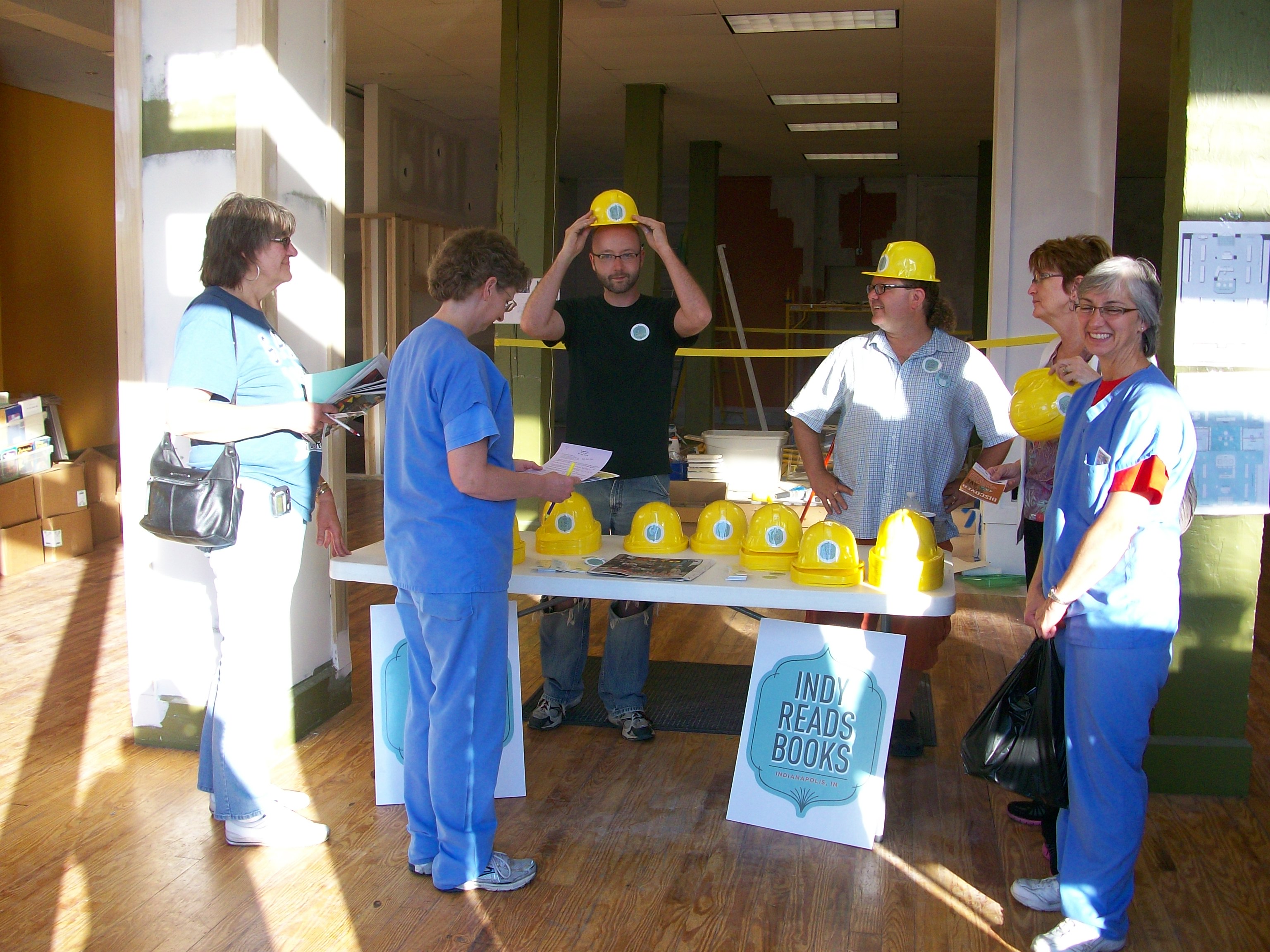
    100_2908.JPG
    Back in 2012, the store was still being refurbished

    Way back in 2012, a couple of weeks after I finished my BA, I happened to be passing a building that was undergoing renovation for a new bookstore that would be opening its doors soon. I needed something to do with myself, so I wound up volunteering there– first to help with the renovations, and then to sort donations and shelve titles and run registers and all the other little side jobs that a bookstore needs to run. I wound up having to take a hiatus from volunteering when I entered grad school, but as soon as I had the chance, I dove right back in again. I needed my happy place.

    Most of the books that fill the shelves at Indy Reads Books are donated, which means that the air is rich with that old book smell. The high ceilings and enormous windows make the store feel open and full of natural light. The building is an old one, and before the first level was a bookstore, it was a bicycle repair shop and a karate school, among others. Now it’s a staple of downtown Indianapolis, and one of the only remaining bookstores in the area. But the building isn’t the only thing revitalized.

    In the United States, 1 in 7 adults can’t read. That number rises to 1 in 5 in Indiana. Illiteracy predominantly affects poor and marginalized populations (in prisons, the illiteracy rate is estimated to be roughly 3 in 5), and it contributes to a vicious cycle of poverty. Illiteracy acts as a major obstacle in getting a job, especially one that pays a living wage, and parents who are illiterate often raise children who can’t read. There’s also shame and stigma surrounding the issue, where the illiterate are unfairly labeled as stupid or lazy, despite the fact that the issue has more to do with schools that are overcrowded, underfunded, and unprepared to help the estimated 20% of students who have learning disabilities.

    Indy Reads is one of many programs working to fight the tide of illiteracy in the United States and around the world. They train volunteer coaches and connect them with adult students, and bring literacy education programs into prisons. All these services are provided for free, so the funds come from charitable donations and the profits raised by the bookstore.

    (If you’re interested in other places that have a peculiar lasting effect on psyches, check out my post on the Potato Room)