JWTroemner.com

Home of JW Troemner and Urban Dragon

  • Maybe you’ve come across those prompts that have been floating around the internet since 1998 or so: they’re massive lists of things that, supposedly, every writer should know about their character. They start out with some solid information: legal name, nicknames, appearance, where they were born, etc.

    And then things get specific. Oddly specific.

    Questions like “What would your character give their life for?” and “What does your character think makes a successful love life?” could be good to know, especially if they’re going to be in situations where that comes up. And then there are some questions like “What was your character’s earliest memory?” or “What is your character’s favorite shape of noodle?” that probably won’t come up at all, outside of very specific circumstances.

    I don’t know about you, but unless it’s a major part of their identity, I really don’t care what a character’s favorite shape of noodle is.
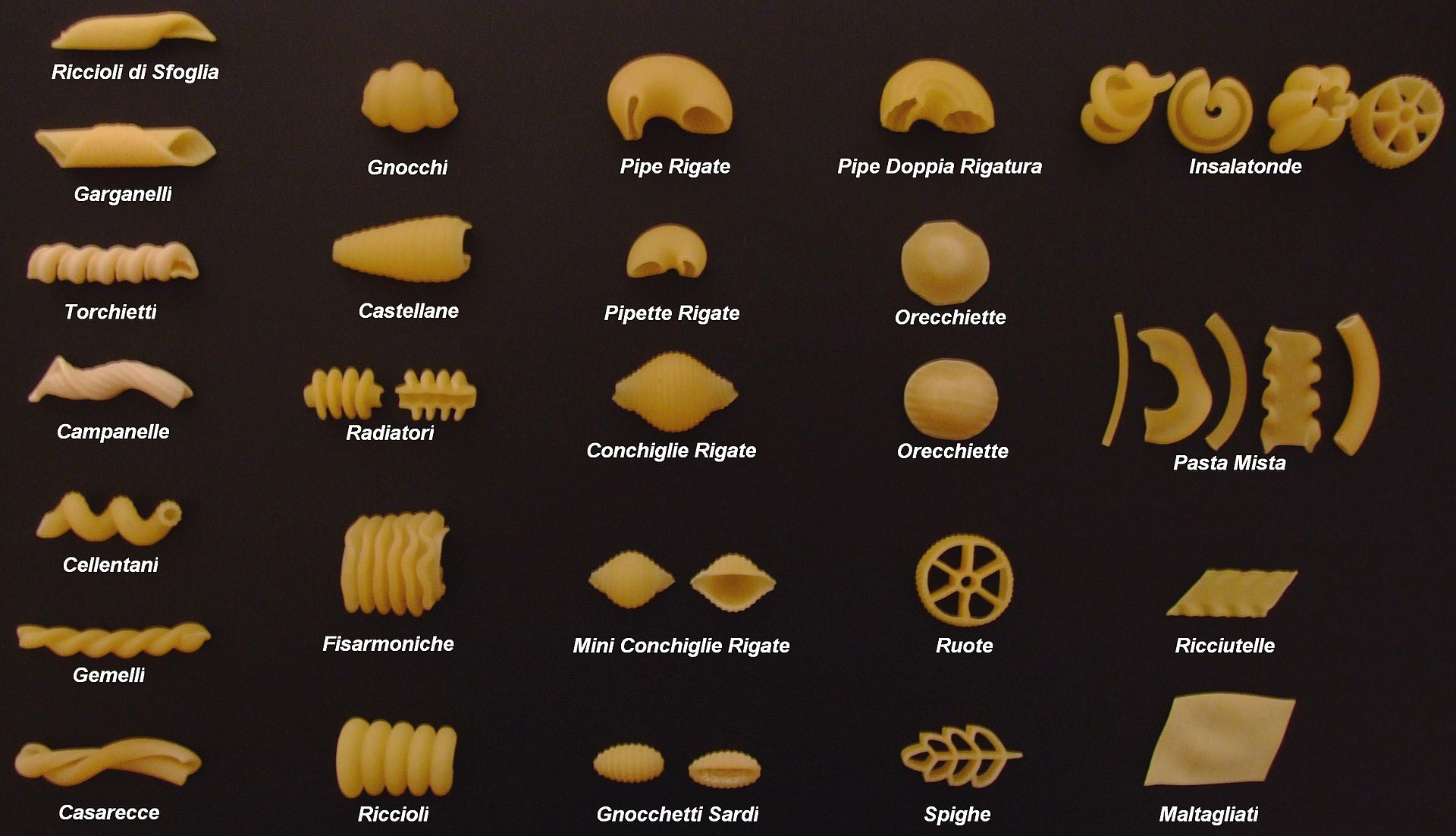
    I’m partial to bowtie noodles, but Boxy’s got a thing for dinosaur shapes. (image from Wikimedia Commons)

    A lot of people will tell you their ideas of what every writer needs to know about their characters, so here’s mine– and instead of the typical 25/50/100, I’m going to give you an easy number to remember. Three.

    1. What do they want? This is both in the short term (I’m thirsty; I want a glass of water) and the long term (I want to become a world famous dancer.) Everybody wants something, and as a writer, you should have a clear understanding of at least the short-term desires of every person that appears in your story.
    2. What is their defining experience? A defining experience is one that shapes who you are, what kinds of things you want, and what you value. It could be a relationship with a particular person, a single moment, or an environment, but it fundamentally altered who they became. For example, Frodo Baggins was shaped by the stories of his uncle Bilbo’s adventures. They instilled in him a craving for adventure and an appreciation for humility and mercy– and those qualities set him apart from every single person he interacted with.
    3. What changes them during the story? In order to be dynamic, a character must change at some point over the course of the story. In order to do so, you must give them a second defining experience that shapes them in a different way. Staying in Tolkien’s world, I would argue that Gimli was changed when he met (and was smitten by) Lady Galadriel of Lothlorien. It didn’t make him an instant Elf Friend, but after that point he treated elves with far more respect, and was able to cement his friendship with Legolas Greenleaf– and in doing so, rise above the animosity and racism that had existed between their two families since before Smaug took Erebor.

    The way I see it, being able to answer those three questions will let you build vivid, dynamic characters– but that’s just my list.

    What questions do you think a writer needs to be able to answer when they create a character? Let us know in the comments!

  • Happy New Year!

    Image via Wikimedia Commons

    Traditionally, I’ve done a new year’s resolution post on this day.

    This year, I’m going to not do that– because isn’t making and breaking traditions what today is about?

    Instead, I give you the first writing prompt of the new year:

    Your character finds a genie, and they are given a wish. Just one. But there’s a catch: the wish can only be used on your character.

    What would they wish for? What would they change– or preserve– or retrieve– or undo– about themselves?

    And what would happen if they got their wish?

    Let us know what your character wished for in the comments, and have a fantastic new year!

  • Just now I was working on a minor transition scene: our heroes were sitting in a diner and unwittingly witnessed the villain making a deal.

    In order to more subtly plant the villain in the diner, I listed off the restaurant’s other patrons: a boy in a college hoodie, a homeless man, the villain’s henchman, and the villain himself.

    It took me a moment to realize what felt off about that: even though I’d gone for a variety of people, I’d made all four of them men. Aside from my protagonists, the only woman in the building was the waitress– and this is in a book that’s intended to be female-focused and female-driven.

    Diversity is an element that needs to be actively considered when you’re writing, or else it becomes easy to backslide.

    Why worry about it at all?

    Remember, even though women comprise roughly 51% of the population, but they don’t get nearly that much representation in media.

    In 2013, only

    • 15% of protagonists
    • 29% of major characters
    • 30% of all speaking characters

    in movies were female (Martha M. Lauzen, Ph.D.). And that’s an actual step up from 2012, when those numbers hit a five-year low.

    You tell 'em, Bill Nye! (gif not mine)
    You tell ’em, Bill Nye! (gif not mine)

    It’s not just in movies, either, even in the classroom, guys consistently get more time and opportunities to speak than girls, even when the teachers make a conscious effort to give fair opportunities to the sexes. Even in daily conversations, women are often crowded out of conversations with men— and when female voices start to inch toward a more even ratio, they’re often seen as dominating conversations.

    This isn’t meant to shame anybody– like I mentioned above, this sort of thing is insidious. It’s so ingrained into our society that we don’t see that we’re doing it. After all, it only took a momentary lapse of attention to turn a regular diner into a sausage fest.

    How do I fix it?

    More authors writing more balanced stories will help to normalize the idea that women are, you know, half of all human beings. There are a lot of systemic issues that need to be addressed before common perceptions really do change, but it’s a start.

    Within your stories, I recommend actually listing off all your named characters according to the gender they identify as. Try doing the same for individual scenes. The nice thing about lists is that they’re hard to argue against. Perception can be fogged by unintentional bias; numbers are far more concrete.

    Once you’ve got your lists (and, if you’re like me, you’re slapping yourself for letting things get so unbalanced), start thinking critically. Would my villain’s henchman be uncharacteristically different as a henchwoman? Would my villain be any less intimidating as a woman? Is there any reason why I can’t just swap pronouns and make that stoned college student a girl instead of a boy?

    With some characters, their gender has a huge impact on their role in the story, but it’s not true nearly as often as you’d think. You can see it in the differences between Red Dragon and NBC’s Hannibal, where both Alan Bloom and Freddy Lounds were cast as women– and doing so opened the door for more interesting perspectives and subplots, without any noticeable cost.

    Do you have any characters who could do to have their gender reassigned? Have you swapped a character’s gender in your stories? Tell us about it in the comments!

  • Let’s start with a vocabulary lesson:

    A person who is Demisexual typically doesn’t experience sexual attraction to someone unless they have a strong bond with them first. On a similar note, a person who is Demiromantic typically won’t fall in love with a person without that same kind of strong bond. It’s on the same gradient as Asexuality.

    We have a flag and everything. (image from Wikimedia commons)

    (more…)

  • I don’t know what your childhood was like, but when I was a kid, the world was divided into very few categories. The people I knew were either friends, family, that amorphous mass that comprises my extended family, and teachers.

    That was it.

    Fast forward twenty years.

    Now I have online friends and local friends, I have my husband, my family, and my extended family. I have the small business owners whose services I use on a frequent basis. I have a boss, a business partner, an illustrator, and a whole bunch of clients.

    With each of these comes a whole slew of behavioral codes.  Each group has its own hierarchies, its own set of taboos, its own set of social niceties to observe, its own set of rituals. Some of them are pretty universal: “Hey, how’s it going? Really? Cool. By the way, are you coming to the spoken word event on Friday? Awesome.”

    Others are more personalized: random pictures of clouds at four in the morning, articles on serial killers sent to my inbox without further explanation, or hyper-focused questions out of the blue on pricing or contract work.

    The more complicated a character’s life is, the more complicated his or her relationships will become. Soon you have to keep track of who knows who, who knows what, who sits where in each hierarchy, and what might be taboo in one circle or another.

    This is how reality works. Unfortunately, it’s also tricky to pull off with writing. Every new character comes with their own list of things the reader will need to understand about that character and their relationship to the rest of the story, and it’s very easy to overload the reader on information. So here are some ideas for making that a little bit easier:

    • Combine characters. Especially the ones who only do one or two things, like getting the protagonist across town or delivering specific information– turn that handful of people into a single person who does all those jobs. Added bonus: that character becomes deeper and more interesting as you mash all the previous one-off characters together.
    • Introduce the characters slowly. Don’t front-load us with characters. Bring each person in as they become relevant. If you need to mention someone beforehand, consider referring to them by an identifier: “My boss called me in today,” or “My butcher got me a sweet deal on these deals.” You can properly introduce that person when they make their first significant appearance.
    • Prune your story. Does a given character assist the entire story, or only a single subplot? Subplots are fun, but at times they can suck attention and energy away from the big picture. Know when to whip out the garden shears and cut out inessential scenes, subplots, and characters.

    Do you have other tricks for cutting down on extraneous characters? Do you have relationships now that you didn’t expect to have when you were a kid? Tell us about it in the comments!

  • The amazing thing about being a writer is that you learn to spot the ideas and ‘what if’s that other people would normally pass by. They’re everywhere, and they’re incredible. And they can also be incredibly frustrating. You can get incredibly intricate and detailed ideas in your head, but for the life of you, you can’t do anything about it. Creating a world is wonderful, but it’s just words on paper unless you have a story to take place within it.

    So you’ve got an idea…

    This afternoon I had a conversation this afternoon on the subject, so I’ll use that as an example: one character discovers that his friend doesn’t actually exist.

    It’s a fantastic idea, and there’s a lot of directions you can go on the subject. So how do you shape that idea into a story?

    Find the problem

    At its core, every story is driven by some form of desire. Everyone wants something– a new bike, their crush to return their affections, the ability to live to see tomorrow, etc.

    Every character is going to have a desire driving them– at least one, and often more.

    • Does the real friend want the unreal friend to find out about their non-existence?
    • Does the unreal friend feel threatened by their non-existence and want to feel more secure?
    • Does the real friend envy the unreal friend’s way of life? What about the other way around?

    And so forth. There are nearly endless variations of things that your characters can want out of life.

    Look for a solution

    Once you figure out what each character wants, figure out how they’re going to go about pursuing that thing, and then have them pursue it. Plot is what happens when we watch them try, fail, try again, and possibly even succeed. Of course, they don’t have to succeed, and sometimes it’s for the best that they don’t. People don’t always want what’s best for them, and sometimes Character A getting what they want can have some nasty repercussions for Character B.

    When that happens, or when Character A’s needs clash with Character B’s desires, that creates conflict, and that’s what the Western idea of story is built around.

    Make sure the action is active

    A general rule of thumb I’ve seen around: If the character can get over their internal by just sitting alone in a room and thinking really hard about it, then it wasn’t really a conflict. If a pair of characters can solve their conflict by just sitting down and having a conversation like actual adults, that wasn’t a conflict, either. Problems shouldn’t be solved by navel-gazing.

    You can have issues be resolved through conversation and meditation, but the actual conflict will be whatever prevented those processes from happening in the first place.


  • ((image via Know Your Meme))

    If you’re a nerd, you know a nerd, or you’ve spent any amount of time on the internet, you’ve probably seen some variation of the above image. It’s a chart of the standard Dungeons & Dragons character alignments, which goes by the theory that any given character can be charted a spectrum between good and evil, lawful and neutral.

    And it works. Kinda. In theory.

    Law and chaos aren’t that big of a discrepancy– on one side you have order and adherence to authority, and on the other you have rebellion and… well, chaos.

    It’s the other spectrum that’s always given me trouble. (more…)

  • They’re just hugging, I swear! (Image from Alexander’s Ragtime Band, 1938, via Wikimedia Commons)

    It’s our protagonist’s first day at a new school. She’s frazzled and distracted, her mind heavy with plot-relevant drama– and BAM! runs headfirst into someone, sending her books flying. She and this stranger look into each other’s eyes, and the readers are given a lavish description of how good-looking he is. Their hands brush as he passes her the books, and she immediately looks away, embarrassed by the contact. They make awkward smalltalk, and he welcomes her to the school and offers to show her to her classroom, adding in a joke that helps lighten the protagonist’s tension.

    Oh– wait– I’m sorry, did you think he was her love interest? Goodness, no. He’s just a minor character! He’s just really nice, and she’s just socially awkward and easily embarrassed by physical contact. Why, what did you think was going on? (more…)

  • Image from http://en.wikipedia.org/wiki/Name_tag

    One of the awkward things about writing is that we become acutely aware of some of the words we use, especially the ones we use most often. “Said” can make us physically cringe, even though readers often glaze over it. In the same way, saying the same character’s name over and over and over again can sometimes start to feel cluttered and over-saturated, and so we can be tempted to mix it up a bit.

    Maybe if the protagonist’s first name is worn out, you’re tempting to switch to his whole name, or his surname. Maybe a nickname, or an identifier like “the bespectacled man”.

    I know it’s tempting, but please don’t– or if you absolutely must, tread with caution. (more…)

  • Worldbuilding is essential to sci-fi and fantasy. Even if your story takes place in modern New York City with some vampires, you still need to build the “world” of those vampires– their culture, their history, their biology, their strengths and weaknesses, their mindsets, and so forth.

    One way to add flavor to a new culture is to address their unspoken rules and taboos.

    The alien world of the late Jack Vance’s The Moon Moth is full of rules and taboos: one of the biggest is that no one ever removes his or her mask in front of another person, and no other person will ever remove your mask. Things are thrown into chaos when a stranger comes to down and starts stealing people’s identities– but the taboo is so strong that nobody is willing to take off their mask, even in the name of catching a killer.

    Apart from being a great read, The Moon Moth also gives us the meaning behind this particular taboo:

    Masks are worn at all times, in accordance with the philosophy that a man should not be compelled to use a similitude foisted upon him by factors beyond his control; that he should be at liberty to choose that semblance most consonant with his [position in society]. In the civilized areas of Sirene… a man literally never shows his face; it is his basic secret. 

    Though we don’t necessarily need to know the specific story behind every custom and taboo in your world, it’s important that as the writer know the reason, and it needs to make sense within the context of your world.

    Going back to the taboo of naked men, we don’t exactly know where it came from, but it could stem from questions of objectification of women, historical representation of beauty in art, and paranoid defense of one’s own sexuality. And more importantly, all of those things interact with each other over the course of history.

    A challenge for writers:

    Try to come up with some taboos for your story.

    Maybe it’s a taboo about food, like not being able to eat with your left hand. Maybe it’s a taboo about who can work with whom, or what you can and can’t do on what days. Maybe it’s a taboo about sex (and for the love of creativity, don’t just make it about which gender can have sex with which– that’s been done to death).

    Now write a quick scene in this world where the taboo is relevant.

    The trick: don’t ever mention what it is. See how the characters naturally steer around it. There’s no need to explain this thing, because everybody already knows, and nobody would dream of violating it.

    And tell us about what you came up with in the comments!